Breaking urban-rural educational inequality: application of an AI relative fairness model in teacher performance evaluation and bonus allocation
DOI:
https://doi.org/10.55056/etq.1173Keywords:
AI empowerment, teacher performance evaluation, bonus allocation, educational equity, urban-rural inequality, algorithmic bias, relative fairness modelAbstract
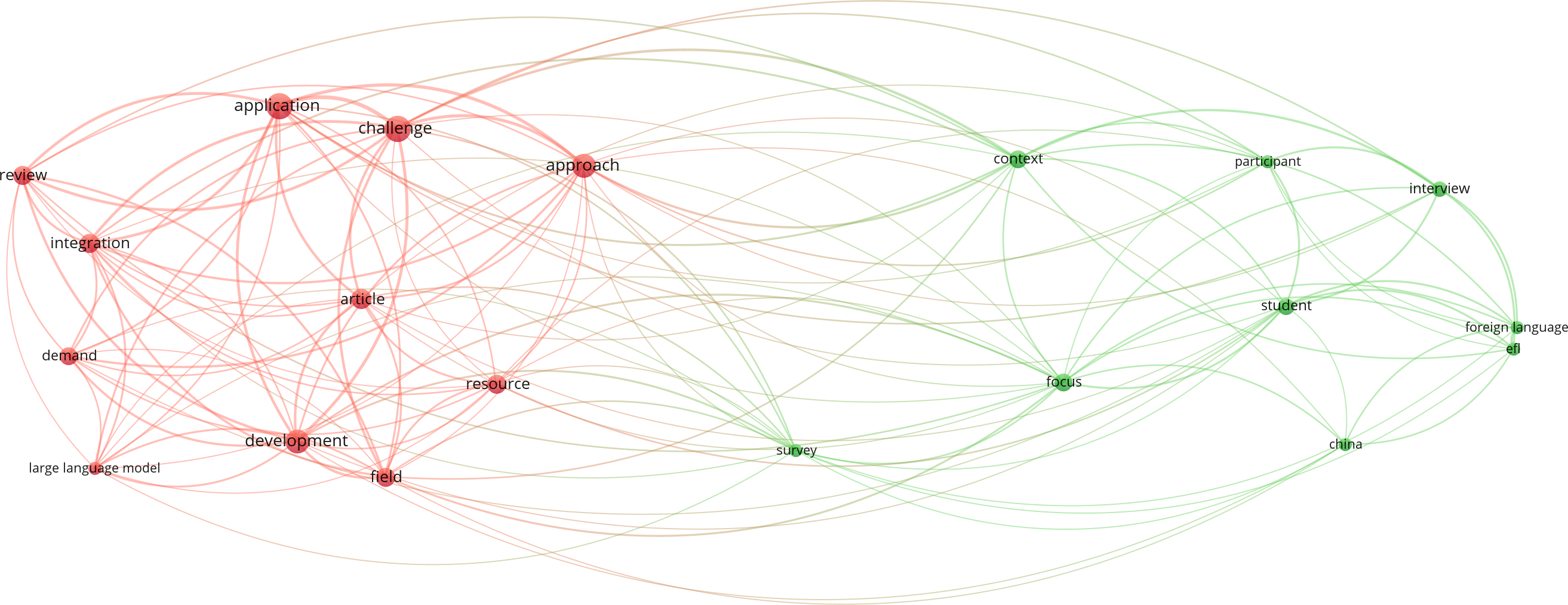
Teacher performance evaluation and bonus allocation in Chinese schools still rely heavily on subjective judgment, and the resulting distortions disproportionately affect rural teachers, exacerbating compensation disparities and attrition that undermine the rural revitalisation agenda and SDG 4. This study asks how artificial intelligence (AI) could make these processes fairer. Following the PRISMA 2020 guidelines, a systematic search of five databases for 2010--2025 returned 4,713 records, of which 30 studies were included and synthesised using structured thematic coding and keyword co-occurrence mapping. Three overlapping themes emerged: AI applications relevant to evaluation (coded in 60% of the included studies), fairness pathways such as explainable AI and participatory decision-making (80%), and urban-rural inequality (20%). The reviewed literature indicates that AI-assisted evaluation can improve the consistency and evidential basis of teacher assessment and relieve administrative burden, but that these gains are conditional on confronting algorithmic bias, model opacity, privacy risk, and the rural digital divide; evaluation models designed specifically for teachers, let alone adapted to rural Chinese contexts, remain scarce. On this basis, the paper proposes a four-dimensional relative fairness model (4DG) combining data-integrity safeguards, transparency through explainable and generative AI, teacher participation, and ethical governance with auditable records. A deliberately simple, assumption-driven simulation - reported transparently as such - illustrates that correcting a substantial share of evaluation bias could narrow the urban-rural bonus gap by roughly 15-25%. Because the review's quantitative synthesis could not be verified against reproducible study-level records, no pooled effect estimate is presented as an empirical finding; the paper's contribution is the governance framework and the agenda it sets for empirical piloting in China's urban-rural context.
Downloads
References
Almubarak, A., Alhalabi, W., Albidewi, I. and Alharbi, E., 2024. An analytical approach for an AI-based teacher performance evaluation system in Saudi Arabia’s schools. Discover Applied Sciences, 6(8), p.406. Available from: https://doi.org/10.1007/s42452-024-06117-4. DOI: https://doi.org/10.1007/s42452-024-06117-4
Azizi, Z., 2022. Fairness in assessment practices in online education: Iranian University English teachers’ perceptions. Language Testing in Asia, 12(1), p.14. Available from: https://doi.org/10.1186/s40468-022-00164-7. DOI: https://doi.org/10.1186/s40468-022-00164-7
Bahroun, Z., Anane, C., Ahmed, V. and Zacca, A., 2023. Transforming Education: A Comprehensive Review of Generative Artificial Intelligence in Educational Settings through Bibliometric and Content Analysis. Sustainability, 15(17), p.12983. Available from: https://doi.org/10.3390/su151712983. DOI: https://doi.org/10.3390/su151712983
Bergdahl, N. and Sjöberg, J., 2025. Attitudes, perceptions and AI self-efficacy in K-12 education. Computers and Education: Artificial Intelligence, 8, p.100358. Available from: https://doi.org/10.1016/j.caeai.2024.100358. DOI: https://doi.org/10.1016/j.caeai.2024.100358
Bond, M., Khosravi, H., De Laat, M., Bergdahl, N., Negrea, V., Oxley, E., Pham, P., Chong, S.W. and Siemens, G., 2024. A meta systematic review of artificial intelligence in higher education: a call for increased ethics, collaboration, and rigour. International Journal of Educational Technology in Higher Education, 21(1), p.4. Available from: https://doi.org/10.1186/s41239-023-00436-z. DOI: https://doi.org/10.1186/s41239-023-00436-z
Celik, I., Dindar, M., Muukkonen, H. and Järvelä, S., 2022. The Promises and Challenges of Artificial Intelligence for Teachers: a Systematic Review of Research. TechTrends, 66(4), pp.616–630. Available from: https://doi.org/10.1007/s11528-022-00715-y. DOI: https://doi.org/10.1007/s11528-022-00715-y
Chai, F., Ma, J., Wang, Y., Zhu, J. and Han, T., 2024. Grading by AI makes me feel fairer? How different evaluators affect college students’ perception of fairness. Frontiers in Psychology, 15, p.1221177. Available from: https://doi.org/10.3389/fpsyg.2024.1221177. DOI: https://doi.org/10.3389/fpsyg.2024.1221177
Chiu, T.K.F., Ahmad, Z. and Çoban, M., 2025. Development and validation of teacher artificial intelligence (AI) competence self-efficacy (TAICS) scale. Education and Information Technologies, 30(5), pp.6667–6685. Available from: https://doi.org/10.1007/s10639-024-13094-z. DOI: https://doi.org/10.1007/s10639-024-13094-z
Costa-Feito, A., Saavedra, A. and Barta, S., 2025. Enhancing student memorisation through teacher webcam usage and the interplay of social presence. International Journal of Educational Technology in Higher Education, 22(1), p.58. Available from: https://doi.org/10.1186/s41239-025-00554-w. DOI: https://doi.org/10.1186/s41239-025-00554-w
Crompton, H., 2023. Evidence of the ISTE Standards for Educators leading to learning gains. Journal of Digital Learning in Teacher Education, 39(4), pp.201–219. Available from: https://doi.org/10.1080/21532974.2023.2244089. DOI: https://doi.org/10.1080/21532974.2023.2244089
Crompton, H. and Burke, D., 2023. Artificial intelligence in higher education: the state of the field. International Journal of Educational Technology in Higher Education, 20(1), p.22. Available from: https://doi.org/10.1186/s41239-023-00392-8. DOI: https://doi.org/10.1186/s41239-023-00392-8
Crompton, H. and Burke, D., 2024. The Educational Affordances and Challenges of ChatGPT: State of the Field. TechTrends, 68(2), pp.380–392. Available from: https://doi.org/10.1007/s11528-024-00939-0. DOI: https://doi.org/10.1007/s11528-024-00939-0
Crompton, H. and Burke, D., 2024. The Nexus of ISTE Standards and Academic Progress: A Mapping Analysis of Empirical Studies. TechTrends, 68(4), pp.711–722. Available from: https://doi.org/10.1007/s11528-024-00973-y. DOI: https://doi.org/10.1007/s11528-024-00973-y
Crompton, H., Edmett, A., Ichaporia, N. and Burke, D., 2024. AI and English language teaching: Affordances and challenges. British Journal of Educational Technology, 55(6), pp.2503–2529. Available from: https://doi.org/10.1111/bjet.13460. DOI: https://doi.org/10.1111/bjet.13460
Crompton, H. and Song, D., 2021. The Potential of Artificial Intelligence in Higher Education. Revista Virtual Universidad Católica del Norte, (62), pp.1–4. Available from: https://doi.org/10.35575/rvucn.n62a1. DOI: https://doi.org/10.35575/rvucn.n62a1
Ding, J., 2018. Deciphering China’s AI dream: The context, components, capabilities, and consequences of China’s strategy to lead the world in AI. Future of Humanity Institute, University of Oxford. Available from: https://cdn.governance.ai/Deciphering_Chinas_AI-Dream.pdf.
Gustafsson, B.A., Cai, M. and Sicular, T., 2025. China’s Urban-Rural Income Gap: A Re-examination. Paper presented at the International Association for Research in Income and Wealth (IARIW) special conference, Hanoi. Available from: https://iariw.org/wp-content/uploads/2025/04/Gustafsson_Hanoi.pdf.
Mehrabi, N., Morstatter, F., Saxena, N., Lerman, K. and Galstyan, A., 2021. A Survey on Bias and Fairness in Machine Learning. ACM Computing Surveys, 54(6), p.115. Available from: https://doi.org/10.1145/3457607. DOI: https://doi.org/10.1145/3457607
National Bureau of Statistics of China, 2024. Households’ Income and Consumption Expenditure in 2023. Press release, 18 January 2024. Available from: https://www.stats.gov.cn/english/PressRelease/202402/t20240201_1947120.html.
Niu, S.J., Luo, J., Niemi, H., Li, X. and Lu, Y., 2022. Teachers’ and Students’ Views of Using an AI-Aided Educational Platform for Supporting Teaching and Learning at Chinese Schools. Education Sciences, 12(12), p.858. Available from: https://doi.org/10.3390/educsci12120858. DOI: https://doi.org/10.3390/educsci12120858
OECD, 2023. Education at a Glance 2023: OECD Indicators. Paris: OECD Publishing. Available from: https://doi.org/10.1787/e13bef63-en. DOI: https://doi.org/10.1787/e13bef63-en
Page, M.J., McKenzie, J.E., Bossuyt, P.M., Boutron, I., Hoffmann, T.C., Mulrow, C.D., Shamseer, L., Tetzlaff, J.M., Akl, E.A., Brennan, S.E., Chou, R., Glanville, J., Grimshaw, J.M., Hróbjartsson, A., Lalu, M.M., Li, T., Loder, E.W., Mayo-Wilson, E., McDonald, S., McGuinness, L.A., Stewart, L.A., Thomas, J., Tricco, A.C., Welch, V.A., Whiting, P. and Moher, D., 2021. The PRISMA 2020 statement: an updated guideline for reporting systematic reviews. BMJ, 372, p.n71. Available from: https://doi.org/10.1136/bmj.n71. DOI: https://doi.org/10.1136/bmj.n71
Rasooli, A., Rasegh, A., Zandi, H. and Firoozi, T., 2023. Teachers’ Conceptions of Fairness in Classroom Assessment: An Empirical Study. Journal of Teacher Education, 74(3), pp.260–273. Available from: https://doi.org/10.1177/00224871221130742. DOI: https://doi.org/10.1177/00224871221130742
Roshid, M.M., Sultana, S., Kabir, M.M.N., Jahan, A., Khan, R. and Haider, M.Z., 2025. Equity, fairness, and social justice in teaching and learning in higher education during the COVID-19 pandemic. Asia Pacific Journal of Education, 45(2), pp.397–418. Available from: https://doi.org/10.1080/02188791.2022.2122024. DOI: https://doi.org/10.1080/02188791.2022.2122024
Sicular, T., Yue, X., Gustafsson, B. and Li, S., 2007. The urban–rural income gap and inequality in China. Review of Income and Wealth, 53(1), pp.93–126. Available from: https://doi.org/10.1111/j.1475-4991.2007.00219.x. DOI: https://doi.org/10.1111/j.1475-4991.2007.00219.x
Tan, X., Cheng, G. and Ling, M.H., 2025. Artificial intelligence in teaching and teacher professional development: A systematic review. Computers and Education: Artificial Intelligence, 8, p.100355. Available from: https://doi.org/10.1016/j.caeai.2024.100355. DOI: https://doi.org/10.1016/j.caeai.2024.100355
Terrazas-Arellanes, F.E., Strycker, L., Alvez, G.G., Miller, B. and Vargas, K., 2025. Promoting Agency Among Upper Elementary School Teachers and Students with an Artificial Intelligence Machine Learning System to Score Performance-Based Science Assessments. Education Sciences, 15(1), p.54. Available from: https://doi.org/10.3390/educsci15010054. DOI: https://doi.org/10.3390/educsci15010054
Tongchai, A. and Malakul, S., 2026. Thai Teachers’Perceptions of Integrating Generative AI in K-12 Education: Opportunities and Challenges. TechTrends, 70(1), pp.93–105. Available from: https://doi.org/10.1007/s11528-025-01128-3. DOI: https://doi.org/10.1007/s11528-025-01128-3
UNESCO Institute for Statistics and Global Education Monitoring Report Team, 2025. 2025 SDG 4 Scorecard progress report on national benchmarks: Focus on the out-of-school rate. Montreal: UNESCO Institute for Statistics. Available from: https://doi.org/10.54676/SKLD4888. DOI: https://doi.org/10.54676/SKLD4888
Velander, J., Taiye, M.A., Otero, N. and Milrad, M., 2024. Artificial Intelligence in K-12 Education: eliciting and reflecting on Swedish teachers’ understanding of AI and its implications for teaching & learning. Education and Information Technologies, 29(4), pp.4085–4105. Available from: https://doi.org/10.1007/s10639-023-11990-4. DOI: https://doi.org/10.1007/s10639-023-11990-4
Villatoro Moral, S. and Moreno-Tallón, F., 2025. Inteligencia Artificial y Educación Inclusiva: soluciones tecnológicas para una enseñanza accesible. Revisión Sistemática [Artificial Intelligence and Inclusive Education: Technological Solutions for Accessible Teaching. A Systematic Review]. Digital Education Review, (47), pp.62–77. Available from: https://doi.org/10.1344/der.2025.47.62-77. DOI: https://doi.org/10.1344/der.2025.47.62-77
Wen, W., Zhou, L., Zhang, M. and Hu, D., 2023. Urban/Rural Disparities in Access to Elite Higher Education: The Case of Tsinghua University. International Journal of Chinese Education, 12(2), pp.1–12. Available from: https://doi.org/10.1177/2212585X231189338. DOI: https://doi.org/10.1177/2212585X231189338
Wu, W., 2025. China’s Endeavors to Promote Educational Equity through Technology Use. Science Insights Education Frontiers, 27(2), pp.4533–4547. Available from: https://doi.org/10.15354/sief.25.re505. DOI: https://doi.org/10.15354/sief.25.re505
Xue, E., Li, J. and Li, X., 2021. Sustainable Development of Education in Rural Areas for Rural Revitalization in China: A Comprehensive Policy Circle Analysis. Sustainability, 13(23), p.13101. Available from: https://doi.org/10.3390/su132313101. DOI: https://doi.org/10.3390/su132313101
Downloads
Submitted
Published
Data Availability Statement
This study is a systematic review of published literature; no primary data were generated. The complete search strategy, extraction codebook, and simulation specification are provided in appendices A-D.
Issue
Section
License
Copyright (c) 2026 Xia Yang

This work is licensed under a Creative Commons Attribution 4.0 International License.
How to Cite




Accepted 2026-04-05
Published 2026-06-20