What influences student satisfaction in online distance e-Learning? A systematic review of evidence from higher education institutions
DOI:
https://doi.org/10.55056/etq.1177Keywords:
Community of Inquiry, equity, higher education, ODeL, online learning, self-regulation, student satisfactionAbstract
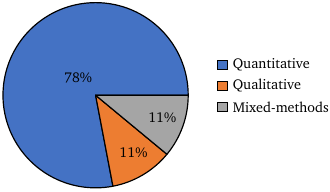
This systematic review synthesises evidence from higher education institutions to identify factors influencing student satisfaction in online distance e-learning (ODeL), associated challenges, and research gaps. Methodologically, quantitative designs dominated (79%), with significant geographic bias toward North America and East Asia (29% of studies). While longitudinal and causal research was scarce, the review analysed 76 peer-reviewed studies (2015-2025) following PRISMA guidelines, and data extraction focused on methodological approaches, geographical distribution, and thematic factors affecting satisfaction. Research findings revealed that five interrelated factors drive satisfaction: (1) technology/system reliability, (2) instructional design/teaching presence, (3) equitable access/resources, (4) learner self-regulation, and (5) psychosocial interaction. However, key barriers include unstable connectivity, inadequate instructor engagement, and student isolation. To address the highlighted barriers, the study suggests that institutions should integrate good technical infrastructure, equity-focused interventions, and psychosocial support systems. Also, instructors must prioritise interactive pedagogy and timely feedback. In terms of originality, this review consolidates multidimensional determinants of ODeL satisfaction, highlighting critical contextual diversity and research design gaps. It proposes actionable strategies for enhancing online learning ecosystems and calls for inclusive, longitudinal studies in underrepresented regions.
Downloads
References
Abramovich, S. and McBride, M., 2018. Open education resources and perceptions of financial value. The Internet and Higher Education, 39(1), pp.33–38. Available from: https://doi.org/10.1016/j.iheduc.2018.06.002. DOI: https://doi.org/10.1016/j.iheduc.2018.06.002
Adams, E.N., Conry, J.M., Heaton, P.C., Ramsinghani, S., Rodgers, P.T. and Eddington, N.D., 2015. Student pharmacists’ perceptions of access to student organization opportunities at colleges/schools of pharmacy with satellite campuses. Currents in Pharmacy Teaching and Learning, 7(2), pp.185–191. Available from: https://doi.org/10.1016/j.cptl.2014.11.014. DOI: https://doi.org/10.1016/j.cptl.2014.11.014
Adewale, S., 2024. Is virtual learning still virtually satisfactory in the post-COVID-19 era for pre-service teachers? Educational Technology Quarterly, 2024(2), p.152–165. Available from: https://doi.org/10.55056/etq.713. DOI: https://doi.org/10.55056/etq.713
Adewale, S. and Ndwandwe, N.D., 2025. Artificial Intelligence-Driven Leadership in Higher Education: A Bibliometric Analysis of Research Trends and Development. International Journal of Learning, Teaching and Educational Research, 24(7), pp.624–645. Available from: https://doi.org/10.26803/ijlter.24.7.31. DOI: https://doi.org/10.26803/ijlter.24.7.31
Adewale, S. and Tahir, M.B., 2022. Virtual learning environment factors as predictors of students’ learning satisfaction during the COVID-19 period in Nigeria. Asian Association of Open Universities Journal, 17(2), pp.120–133. Available from: https://doi.org/10.1108/AAOUJ-10-2021-0121. DOI: https://doi.org/10.1108/AAOUJ-10-2021-0121
Ahmed, M.B.M., Ahmed, A.B.M., Gasmalha, M.E.A., Abdalla, O.Z.E., Ahmed, S.H.M., Mohammed, B.A.A., Ebrahim, R.A.O., Abdeen, M.H.S., Babiker, E.O.M., Ahmed, T.A.A., Ahmed, A.A.O., Ahmed, D.S.M., Mubashir, M. and Ahmed, S.M.M., 2025. Sudanese medical students’ satisfaction with online learning and its association with their psychological distress: a cross-sectional study. BMC Medical Education, 25(1), 706. Available from: https://doi.org/10.1186/s12909-025-07228-1. DOI: https://doi.org/10.1186/s12909-025-07228-1
Akhtar, S., Alfuraydan, M.M., Mughal, Y.H. and Nair, K.S., 2025. Adoption of Massive Open Online Courses (MOOCs) for Health Informatics and Administration Sustainability Education in Saudi Arabia. Sustainability, 17(9), 3795. Available from: https://doi.org/10.3390/su17093795. DOI: https://doi.org/10.3390/su17093795
Al Maskari, S., 2025. Navigating Remote Learning: A study on Student Perceptions During Times of Uncertainty. Qubahan Academic Journal, 5(1), pp.810–823. Available from: https://doi.org/10.48161/qaj.v5n1a1482. DOI: https://doi.org/10.48161/qaj.v5n1a1482
Al-Zahrani, A.M., 2025. Exploring the Impact of Artificial Intelligence Chatbots on Human Connection and Emotional Support Among Higher Education Students. Sage Open, 15(2), 21582440251340615. Available from: https://doi.org/10.1177/21582440251340615. DOI: https://doi.org/10.1177/21582440251340615
Alblooshi, M., 2024. Examining the Relationship Between Students Online Learning Readiness and Their Satisfaction on Distance Learning. European Conference on E-Learning, 23(1), pp.9–16. Available from: https://doi.org/10.34190/ecel.23.1.3059. DOI: https://doi.org/10.34190/ecel.23.1.3059
Alqahtani, M.A., Alamri, M.M., Sayaf, A.M. and Al-Rahmi, W.M., 2022. Exploring student satisfaction and acceptance of e-learning technologies in Saudi higher education. Frontiers in Psychology, 13, 939336. Available from: https://doi.org/10.3389/fpsyg.2022.939336. DOI: https://doi.org/10.3389/fpsyg.2022.939336
Alrousan, M.K., Al-Madadha, A., Al Khasawneh, M.H. and Adel Tweissi, A., 2021. Determinants of virtual classroom adoption in Jordan: the case of princess Sumaya university for technology. Interactive Technology and Smart Education, 19(2), pp.121–144. Available from: https://doi.org/10.1108/ITSE-09-2020-0211. DOI: https://doi.org/10.1108/ITSE-09-2020-0211
Alshathry, S. and Alojail, M., 2024. Evaluating Post-Pandemic Undergraduate Student Satisfaction with Online Learning in Saudi Arabia: The Significance of Self-Directed Learning. Applied Sciences, 14(19), 8889. Available from: https://doi.org/10.3390/app14198889. DOI: https://doi.org/10.3390/app14198889
Altınsoy, E. and Boyraz, S., 2025. Online learning readiness and satisfaction in English as a foreign language at higher education context: the moderating role of engagement. Frontiers in Psychology, 16, 1602117. Available from: https://doi.org/10.3389/fpsyg.2025.1602117. DOI: https://doi.org/10.3389/fpsyg.2025.1602117
Anggoro, K.J. and Maretha, A.L., 2025. Interactive Response Systems in Online English Instruction: Tertiary EFL Students’ Voices. International Journal of Distance Education Technologies (IJDET), 23(1), pp.1–24. Available from: https://doi.org/10.4018/IJDET.377129. DOI: https://doi.org/10.4018/IJDET.377129
Annamalai, N., Zakarneh, B., Mangaleswaran, S., Gaforov, I.U. and Norinboev, A.V., 2025. Online Flipped Google Classroom: An Assistive Tool in English Language Learning. Theory and Practice in Language Studies, 15(4), pp.1255–1265. Available from: https://doi.org/10.17507/tpls.1504.24. DOI: https://doi.org/10.17507/tpls.1504.24
Bolliger, D.U., Martin, F. and Kim, S., 2024. Development and validation of the online learner satisfaction instrument. Educational technology research and development, 72(6), pp.2963–2987. Available from: https://doi.org/10.1007/s11423-024-10384-8. DOI: https://doi.org/10.1007/s11423-024-10384-8
Bouranta, N., Psomas, E.L. and Kafetzopoulos, D., 2024. Integrating online learning into service quality assessment in higher-education its influence on student satisfaction. The TQM Journal, 37(5), pp.1418–1445. Available from: https://doi.org/10.1108/TQM-06-2023-0180. DOI: https://doi.org/10.1108/TQM-06-2023-0180
Büchter, R.B., Rombey, T., Mathes, T., Khalil, H., Lunny, C., Pollock, D., Puljak, L., Tricco, A.C. and Pieper, D., 2023. Systematic reviewers used various approaches to data extraction and expressed several research needs: a survey. Journal of Clinical Epidemiology, 159, pp.214–224. Available from: https://doi.org/10.1016/j.jclinepi.2023.05.027. DOI: https://doi.org/10.1016/j.jclinepi.2023.05.027
Cao, J.T., Burgess, B., Foster, J.K., Yaoyuneyong, G. and Wallace, L.K., 2022. Rapid Transitioning to Remote Learning: Shared Responsibility and Coping Strategies. Journal of Marketing Education, 44(2), pp.235–249. Available from: https://doi.org/10.1177/02734753211044744. DOI: https://doi.org/10.1177/02734753211044744
Carlos, A.C., Arturo, Z.L., Cesar, B.A., Andrés, F.R. and Miriam, A.S., 2025. Improving the teaching of the digital signal processing course for undergraduate students in electrical engineering. Discover Education, 4(1), 49. Available from: https://doi.org/10.1007/s44217-025-00437-2. DOI: https://doi.org/10.1007/s44217-025-00437-2
Chan, V., 2025. Enhancing translation technology skills through blended learning: a study of student perceptions and satisfaction with bMOOC in higher education. Frontiers in Education, 10, 1613880. Available from: https://doi.org/10.3389/feduc.2025.1613880. DOI: https://doi.org/10.3389/feduc.2025.1613880
Chandra, A., Sengupta, S. and Vaish, A., 2025. An investigative study among higher education students’ continuance intention towards e-learning in India. Education and Information Technologies, 30(4), pp.4933–4957. Available from: https://doi.org/10.1007/s10639-024-12997-1. DOI: https://doi.org/10.1007/s10639-024-12997-1
Chen, C., Landa, S., Padilla, A. and Yur-Austin, J., 2022. Post-pandemic assessment of online teaching and learning in higher business education. International Journal of Educational Management, 36(6), pp.1065–1079. Available from: https://doi.org/10.1108/IJEM-11-2021-0430. DOI: https://doi.org/10.1108/IJEM-11-2021-0430
Cinquin, P.A., Guitton, P. and Sauzéon, H., 2019. Online e-learning and cognitive disabilities: A systematic review. Computers & Education, 130, pp.152–167. Available from: https://doi.org/10.1016/j.compedu.2018.12.004. DOI: https://doi.org/10.1016/j.compedu.2018.12.004
Contrino, M.F., Reyes-Millán, M., Vázquez-Villegas, P. and Membrillo-Hernández, J., 2024. Using an adaptive learning tool to improve student performance and satisfaction in online and face-to-face education for a more personalized approach. Smart Learning Environments, 11(1), 6. Available from: https://doi.org/10.1186/s40561-024-00292-y. DOI: https://doi.org/10.1186/s40561-024-00292-y
Cooper, V.A., Forino, G., Kanjanabootra, S. and von Meding, J., 2020. Leveraging the community of inquiry framework to support web-based simulations in disaster studies. The Internet and Higher Education, 47, 100757. Available from: https://doi.org/10.1016/j.iheduc.2020.100757. DOI: https://doi.org/10.1016/j.iheduc.2020.100757
Creswell, J.W. and Poth, C.N., 2023. Qualitative Inquiry and Research Design: Choosing Among Five Approaches. 5th ed. New York: Sage Publications.
Cui, Y., Ma, Z., Wang, L., Yang, A., Liu, Q., Kong, S. and Wang, H., 2023. A survey on big data-enabled innovative online education systems during the COVID-19 pandemic. Journal of Innovation & Knowledge, 8(1), 100295. Available from: https://doi.org/10.1016/j.jik.2022.100295. DOI: https://doi.org/10.1016/j.jik.2022.100295
de Freitas, S., Waring, P., Douglas, H.E., Curtis, G.J. and Ritchie, S.M., 2022. Delivering blended learning to transnational students: students’ perceptions and needs-satisfaction. Studies in Higher Education, 47(9), pp.1890–1902. Available from: https://doi.org/10.1080/03075079.2021.1983533. DOI: https://doi.org/10.1080/03075079.2021.1983533
de Lourdes Machado-Taylor, M., Meira Soares, V., Brites, R., Brites Ferreira, J., Farhangmehr, M., Gouveia, O.M.R. and Peterson, M., 2016. Academic job satisfaction and motivation: findings from a nationwide study in portuguese higher education. Studies in Higher Education, 41(3), pp.541–559. Available from: https://doi.org/10.1080/03075079.2014.942265. DOI: https://doi.org/10.1080/03075079.2014.942265
Dinh, C.T., 2025. Investigating EFL students’ perceived values of online cooperative learning in MOOCs. Contemporary educational technology, 17(1), ep552. Available from: https://doi.org/10.30935/cedtech/15718. DOI: https://doi.org/10.30935/cedtech/15718
Dorresteijn, C. van, Fajardo-Tovar, D., Pareja Roblin, N., Cornelissen, F., Meij, M., Voogt, J. and Volman, M., 2025. What Factors Contribute to Effective Online Higher Education? A Meta-Review. Technology, Knowledge and Learning, 30(1), pp.171–202. Available from: https://doi.org/10.1007/s10758-024-09750-5. DOI: https://doi.org/10.1007/s10758-024-09750-5
Elansari, H. and Laachach, A., 2024. Exploring factors influencing perceived e-learning quality in foreign language education: insights from Morocco. Quality Assurance in Education, 33(3), pp.393–409. Available from: https://doi.org/10.1108/QAE-09-2024-0198. DOI: https://doi.org/10.1108/QAE-09-2024-0198
Fan, J. and Tian, M., 2024. Satisfaction with Online Chinese Learning among International Students in China: A Study Based on the fsQCA Method. Sustainability, 16(3), 1086. Available from: https://doi.org/10.3390/su16031086. DOI: https://doi.org/10.3390/su16031086
Fedajev, A., Jovanović, D., Janković-Perić, M. and Radulescu, M., 2025. Exploring the Nexus of Distance Learning Satisfaction: Perspectives from Accounting Students in Serbian Public Universities During the Pandemic. Journal of the Knowledge Economy, 16(1), pp.4465–4495. Available from: https://doi.org/10.1007/s13132-024-02138-x. DOI: https://doi.org/10.1007/s13132-024-02138-x
Fernández-Batanero, J.M., Montenegro-Rueda, M., Fernández-Cerero, J. and López Menéses, E., 2023. Adoption of the Internet of Things in higher education: opportunities and challenges. Interactive Technology and Smart Education, 21(2), pp.292–307. Available from: https://doi.org/10.1108/ITSE-01-2023-0025. DOI: https://doi.org/10.1108/ITSE-01-2023-0025
Finlay, M.J., Tinnion, D.J. and Simpson, T., 2022. A virtual versus blended learning approach to higher education during the COVID-19 pandemic: The experiences of a sport and exercise science student cohort. Journal of Hospitality, Leisure, Sport & Tourism Education, 30, 100363. Hospitality, Leisure, Sport and Tourism Education and COVID-19 Disruptions. Available from: https://doi.org/10.1016/j.jhlste.2021.100363. DOI: https://doi.org/10.1016/j.jhlste.2021.100363
Gupta, N. and Hooda, A., 2023. Online education and student engagement in higher education institutes during COVID-19: an SEM-based study. International Journal of Management in Education, 17(2), pp.179–206. Available from: https://doi.org/10.1504/IJMIE.2023.129258. DOI: https://doi.org/10.1504/IJMIE.2023.129258
Hikmatul Qowi, N., Suratmi, S., Faridah, V.N., Lestari, T.P., Pramestirini, R.A., Karsim, K. and Pamungkas, N.R.T., 2022. The effect of online learning on student satisfaction in nursing education during the COVID-19 pandemic. Jurnal Ners, 17(2), p.115–120. Available from: https://doi.org/10.20473/jn.v17i2.34567. DOI: https://doi.org/10.20473/jn.v17i2.34567
Hu, T., Zhang, M.l., Liu, H., Liu, J.c., Pan, S.j., Guo, J.h., Tian, Z.e. and Cui, L., 2022. The influence of “small private online course + flipped classroom” teaching on physical education students’ learning motivation from the perspective of self-determination theory. Frontiers in Psychology, 13, 938426. Available from: https://doi.org/10.3389/fpsyg.2022.938426. DOI: https://doi.org/10.3389/fpsyg.2022.938426
Ionescu, C.G., Chendea, A. and Licu, M., 2023. Is Satisfaction with Online Learning Related to Depression, Anxiety, and Insomnia Symptoms? A Cross-Sectional Study on Medical Undergraduates in Romania. European Journal of Investigation in Health, Psychology and Education, 13(3), pp.580–594. Available from: https://doi.org/10.3390/ejihpe13030045. DOI: https://doi.org/10.3390/ejihpe13030045
Karaca, O., Çınarcık, B.Ş., Aşık, A., Sağlam, C., Yiğit, Y., Hakverdi, G., Yetkiner, A.A. and Ersin, N., 2024. Impact of fully online flipped classroom on academic achievement in undergraduate dental education: An experimental study. European Journal of Dental Education, 28(1), pp.212–226. Available from: https://doi.org/10.1111/eje.12938. DOI: https://doi.org/10.1111/eje.12938
Kozan, K., Jian, S. and Grimmet, K., 2025. Ambivalent learner satisfaction in relation to teaching, cognitive, and social presence in distance education. Turkish Online Journal of Distance Education, 26(2), pp.1–15. Available from: https://doi.org/10.17718/tojde.1517504. DOI: https://doi.org/10.17718/tojde.1517504
Lallmahomed, M.Z.I., 2025. Investigating the impact of challenge and hindrance techno stressors on academic performance in online learning environments. Discover Education, 4(1), 231. Available from: https://doi.org/10.1007/s44217-025-00669-2. DOI: https://doi.org/10.1007/s44217-025-00669-2
Li, X., Li, F., Liu, W., Xie, Q., Yuan, B., Wang, L. and Wang, M., 2024. Effectiveness of the application of small private online course combined with PBL model based on massive open online course in the teaching of neurology. BMC Medical Education, 24(1), 1518. Available from: https://doi.org/10.1186/s12909-024-06460-5. DOI: https://doi.org/10.1186/s12909-024-06460-5
Luarn, P., Chen, C.C. and Chiu, Y.P., 2025. How does perceived value of gamification improve online learning effectiveness? The role of flow state. Interactive Learning Environments, 33(4), pp.3037–3051. Available from: https://doi.org/10.1080/10494820.2024.2436932. DOI: https://doi.org/10.1080/10494820.2024.2436932
Ly, R. and Ly, B., 2025. Unraveling the dynamics of online learning engagement: a Cambodian perspective. Educational Research for Policy and Practice, 24(3), pp.495–515. Available from: https://doi.org/10.1007/s10671-025-09401-1. DOI: https://doi.org/10.1007/s10671-025-09401-1
Mabrouk, F., Mekni, M.M. and Aldawish, A., 2022. Digital Learning, Life Satisfaction, and Perceived Stress Due to COVID-19 Emergency: Case Study Among Female Saudi University Students. Frontiers in Psychology, 13, 875608. Available from: https://doi.org/10.3389/fpsyg.2022.875608. DOI: https://doi.org/10.3389/fpsyg.2022.875608
Markova, T., Glazkova, I. and Zaborova, E., 2017. Quality Issues of Online Distance Learning. Procedia - Social and Behavioral Sciences, 237, pp.685–691. Education, Health and ICT for a Transcultural World. Available from: https://doi.org/10.1016/j.sbspro.2017.02.043. DOI: https://doi.org/10.1016/j.sbspro.2017.02.043
Martin, F., Sun, T. and Westine, C.D., 2020. A systematic review of research on online teaching and learning from 2009 to 2018. Computers & Education, 159, p.104009. Available from: https://doi.org/10.1016/j.compedu.2020.104009. DOI: https://doi.org/10.1016/j.compedu.2020.104009
Mazurek, E., 2022. Higher education during the COVID-19 pandemic in the opinions of students in Poland. Tuning Journal for Higher Education, 10(1), pp.263–284. Available from: https://doi.org/10.18543/tjhe.2172. DOI: https://doi.org/10.18543/tjhe.2172
Mncube, V.S., Mutongoza, B.H. and Olawale, B.E., 2021. Managing higher education institutions in the context of COVID-19 stringency: Experiences of stakeholders at a rural South African university. Perspectives in Education, 39(1), pp.390–409. Available from: https://doi.org/10.18820/2519593X/pie.v39.i1.24. DOI: https://doi.org/10.18820/2519593X/pie.v39.i1.24
Mohammad, R.F. and Kamran, M., 2023. Examining the efficacy of online learning in nurturing students’ learning: an analysis of students’ experiences. Asian Association of Open Universities Journal, 18(3), pp.218–232. Available from: https://doi.org/10.1108/AAOUJ-11-2022-0163. DOI: https://doi.org/10.1108/AAOUJ-11-2022-0163
Mousavi, A., Mares, C. and Stonham, T., 2015. Continuous feedback loop for adaptive teaching and learning process using student surveys. International Journal of Mechanical Engineering Education, 43(4), pp.247–264. Available from: https://doi.org/10.1177/0306419015606618. DOI: https://doi.org/10.1177/0306419015606618
Moussa, N., 2023. Conceptualizing the future of e-Learning: examining students’ readiness, satisfaction, and intention to continue employing remote learning in higher education landscape. Journal of e-Learning and Knowledge Society, 19(2), pp.1–11. Available from: https://doi.org/10.20368/1971-8829/1135619.
Nair, G.K., 2025. What shapes online mode of teaching impact on hospitality students’ academic achievement? An empirical assessment during COVID-19. International Journal of Knowledge and Learning, 18(1), pp.65–83. Available from: https://doi.org/10.1504/IJKL.2025.143070. DOI: https://doi.org/10.1504/IJKL.2025.143070
Najjar, N., Rouphael, M., Bitar, T. and Hleihel, W., 2025. The rise and drop of online learning: adaptability and future prospects. Frontiers in Education, 10, 1522905. Available from: https://doi.org/10.3389/feduc.2025.1522905. DOI: https://doi.org/10.3389/feduc.2025.1522905
Nasir, M.K.M. and Ngah, A.H., 2022. The Sustainability of a Community of Inquiry in Online Course Satisfaction in Virtual Learning Environments in Higher Education. Sustainability, 14(15), 9633. Available from: https://doi.org/10.3390/su14159633. DOI: https://doi.org/10.3390/su14159633
Nepal, R.M., Guragain, S., Ghimire, J. and Khadka, B., 2025. Quality of e-Learning in Nepalese Universities During the COVID-19 Pandemic. Electronic Journal of e-Learning, 23(1), pp.143–156. Available from: https://doi.org/10.34190/ejel.23.1.3955. DOI: https://doi.org/10.34190/ejel.23.1.3955
Nguyen, H.H., Tuong, H.A., Hoang-Thi, M. and Nguyen, T.V., 2022. Factors Influencing Online Learner Performance During Coronavirus Disease Pandemic: A Case Study in Vietnamese Universities. European Journal of Educational Research, 11(3), pp.1509–1522. Available from: https://doi.org/10.12973/eu-jer.11.3.1509. DOI: https://doi.org/10.12973/eu-jer.11.3.1509
Olawale, B.E., 2023. Teacher Quality and Learner Achievement in South African Schools. In: D. Dias and T. Candeias, eds. Academic Performance - Students, Teachers and Institutions on the Stage. London: IntechOpen, chap. 12. Available from: https://doi.org/10.5772/intechopen.113774. DOI: https://doi.org/10.5772/intechopen.113774
Olawale, B.E. and Maphalala, M.C., 2026. Self-reflection and concept mapping as self-regulated learning strategies for learners in Online Open Distance e-Learning: A Bibliometric Review from 2014-2024. Interdisciplinary Journal of Education Research, 8(1), p.a11. Available from: https://doi.org/10.38140/ijer-2026.vol8.1.11. DOI: https://doi.org/10.38140/ijer-2026.vol8.1.11
Orejon, D., Linden, H., Tudela, I., Ameri, T. and McHale, G., 2025. Online preparation for enhanced practice, confidence and learning, in chemical engineering experimental laboratories. Education for Chemical Engineers, 50, pp.59–71. Available from: https://doi.org/10.1016/j.ece.2024.12.004. DOI: https://doi.org/10.1016/j.ece.2024.12.004
Park, Y., Baldry, T.A. and Amarilla, J., 2025. Responses to the COVID-19 pandemic: Impacts on higher education in East Asia. Journal of International Students, 15(6), p.103–128. Available from: https://doi.org/10.32674/v3gtvt08. DOI: https://doi.org/10.32674/v3gtvt08
Petticrew, M. and Roberts, H., 2006. Systematic Reviews in the Social Sciences: A Practical Guide. Blackwell Publishing. Available from: https://fcsalud.ua.es/en/portal-de-investigacion/documentos/tools-for-the-bibliographic-research/guide-of-systematic-reviews-in-social-sciences.pdf. DOI: https://doi.org/10.1002/9780470754887
Pozza, D.H., Costa-Pereira, J.T. and Tavares, I., 2025. Perceptions of Students and Teachers Regarding Remote and Face-to-Face Assessments in the Evolving Higher Education Landscape. Education Sciences, 15(3), 360. Available from: https://doi.org/10.3390/educsci15030360. DOI: https://doi.org/10.3390/educsci15030360
Ranjbar, F., Sharif-Nia, H., Shiri, M. and Rahmatpour, P., 2024. The effect of spaced E-Learning on knowledge of basic life support and satisfaction of nursing students: a quasi-experimental study. BMC Medical Education, 24(1), p.537. Available from: https://doi.org/10.1186/s12909-024-05533-9. DOI: https://doi.org/10.1186/s12909-024-05533-9
Rezapour, M. and Elmshaeuser, S.K., 2022. Artificial intelligence-based analytics for the impacts of COVID-19 and online learning on college students’ mental health. PLOS One, 17(11), e0276767. Available from: https://doi.org/10.1371/journal.pone.0276767. DOI: https://doi.org/10.1371/journal.pone.0276767
Robinson Jr, L., 2025. Exploring Determinants of Online Learning Acceptance: The Role of Readiness, Peer Support, and Instructional Support. Electronic Journal of e-Learning, 23(2), pp.130–142. Available from: https://doi.org/10.34190/ejel.23.2.4048. DOI: https://doi.org/10.34190/ejel.23.2.4048
Sahatjian, Z., Olson-Buchanan, J.B., Chu-Jacoby, R. and MacDougall, A.E., 2026. Exploring Student Perceptions and Individual Factors Shaping Student Success in Virtual and In-Person Service-Learning Business Courses. Journal of Experiential Education, 49(1), pp.115–137. Available from: https://doi.org/10.1177/10538259251362149. DOI: https://doi.org/10.1177/10538259251362149
Salas-Pilco, S.Z., Xiao, K. and Hu, X., 2022. Artificial Intelligence and Learning Analytics in Teacher Education: A Systematic Review. Education sciences, 12(8), 569. Available from: https://doi.org/10.3390/educsci12080569. DOI: https://doi.org/10.3390/educsci12080569
Sampaio, S. and Cormican, K., 2025. Breaking Barriers: Enhancing Student Satisfaction in Online Engineering Education. IEEE Transactions on Education, 68(4), pp.336–345. Available from: https://doi.org/10.1109/TE.2025.3573603. DOI: https://doi.org/10.1109/TE.2025.3573603
Samuel-Azran, T., Goldberg, S., Hayat, T. and Amichai-Hamburger, Y., 2025. The Social Side of Online Learning: How Social Capital Can Enhance Online Learning. Sage Open, 15(1), 21582440251325600. Available from: https://doi.org/10.1177/21582440251325600. DOI: https://doi.org/10.1177/21582440251325600
Sasaki, N. and Lee, S., 2025. Evaluation of Remote Surgical Hands-on Training in Veterinary Education Using a Hololens Mixed Reality Head-Mounted Display. Journal of Veterinary Medical Education, 52(3), pp.425–430. Available from: https://doi.org/10.3138/jvme-2023-0115. DOI: https://doi.org/10.3138/jvme-2023-0115
Schweighart, R., Hast, M., Pampel, A.M., Rebien, J.A. and Trautwein, C., 2024. Transition into Distance Education: A Scoping Review. Education Sciences, 14(10), 1130. Available from: https://doi.org/10.3390/educsci14101130. DOI: https://doi.org/10.3390/educsci14101130
Secreto, P.V. and Pamulaklakin, R.L., 2015. Learners’ satisfaction level with online student portal as a support system in an open and distance e-learning environment (ODeL). Turkish Online Journal of Distance Education, 16(3), pp.33–47. Available from: https://doi.org/10.17718/tojde.32741. DOI: https://doi.org/10.17718/tojde.32741
Sghir, N., Adadi, A. and Lahmer, M., 2023. Recent advances in Predictive Learning Analytics: A decade systematic review (2012–2022). Education and Information Technologies, 28(7), pp.8299–8333. Available from: https://doi.org/10.1007/s10639-022-11536-0. DOI: https://doi.org/10.1007/s10639-022-11536-0
Shahrill, M., Leong, E., Asamoah, D., Naing, L., Petra, M.I., Santos, J.H. and Abdul Aziz, A.B.Z., 2024. Patterns of university online teaching and learning delivery approaches and students’ performance during COVID-19. Learning Environments Research, 27(3), pp.537–556. Available from: https://doi.org/10.1007/s10984-023-09489-3. DOI: https://doi.org/10.1007/s10984-023-09489-3
Singh, H., Singh, V.V., Gupta, A.K. and Kapur, P.K., 2024. Assessing e-learning platforms in higher education with reference to student satisfaction: a PLS-SEM approach. International Journal of System Assurance Engineering and Management, 15(10), pp.4885–4896. Available from: https://doi.org/10.1007/s13198-024-02497-3. DOI: https://doi.org/10.1007/s13198-024-02497-3
Song, J. and Lee, J., 2025. Presence and motivation: Comparing synchronous and asynchronous learning environments for foreign language learners using path analysis. Education and Information Technologies, 30(5), pp.6061–6090. Available from: https://doi.org/10.1007/s10639-024-13047-6. DOI: https://doi.org/10.1007/s10639-024-13047-6
Suhandiah, S., Suhariadi, F., Yulianti, P., Wardani, R. and Muliatie, Y.E., 2022. Online learning satisfaction in higher education: what are the determining factors? Jurnal Cakrawala Pendidikan, 41(2), pp.351–364. Available from: https://doi.org/10.21831/cp.v41i2.35724. DOI: https://doi.org/10.21831/cp.v41i2.35724
Sulistiani, D., Bashith, A. and Amin, S., 2025. E-learner success assesment model (E_LSAM) in higher education: Does it work? Edelweiss Applied Science and Technology, 9(1), p.159–172. Available from: https://doi.org/10.55214/25768484.v9i1.4006. DOI: https://doi.org/10.55214/25768484.v9i1.4006
Sultana, N., Eva, T.P., Akter, S. and Shahriar, S.H.B., 2025. Exploring new realities in hybrid learning during post-COVID-19: perspectives from private and public universities in Bangladesh. Asian Education and Development Studies, 14(4), pp.725–741. Available from: https://doi.org/10.1108/AEDS-03-2024-0067. DOI: https://doi.org/10.1108/AEDS-03-2024-0067
Sun, L., Wang, Y., Qu, Z., Liu, J., Tian, J., Yu, Y., Muhammad, G. and Ragab, M., 2025. Holo-FAFL: Cross-Modal Feature Augmentation and Latency-Aware Asynchronous Federated Learning for Holographic IoT Systems. IEEE Transactions on Consumer Electronics, 71(4), pp.11475–11486. Available from: https://doi.org/10.1109/TCE.2025.3612586. DOI: https://doi.org/10.1109/TCE.2025.3612586
Tanguihan, L., 2024. Evaluating Student Satisfaction and Preferences in Higher Education Online Learning: A Post-Pandemic Exploration. Journal of Interdisciplinary Perspectives, 2(9), p.304–311. Available from: https://doi.org/10.69569/jip.2024.0368. DOI: https://doi.org/10.69569/jip.2024.0368
Tanti, Anwar, K., Jamaluddin, Saleh, A.S., Yusup, D.K. and Jahanifar, M., 2025. Faith Meets Technology: Navigating Student Satisfaction In Indonesia’s Islamic Higher Education Online Learning. Jurnal Ilmiah Ilmu Terapan Universitas Jambi, 9(2), pp.695–708. Available from: https://doi.org/10.22437/jiituj.v9i2.41513. DOI: https://doi.org/10.22437/jiituj.v9i2.41513
Tawafak, R.M., Romli, A.B.T. and Arshah, R.B.A., 2019. E-learning Model for Students’ Satisfaction in Higher Education Universities: Review Paper. 2019 International Conference on Fourth Industrial Revolution (ICFIR). pp.1–6. Available from: https://doi.org/10.1109/ICFIR.2019.8894778. DOI: https://doi.org/10.1109/ICFIR.2019.8894778
Tereshko, L.M., Weiss, M.J., Cross, S. and Neang, L., 2025. Culturally Diverse Student Engagement in Online Higher Education: A Review. Journal of Behavioral Education, 34(4), pp.902–934. Available from: https://doi.org/10.1007/s10864-024-09554-8. DOI: https://doi.org/10.1007/s10864-024-09554-8
Tlais, S., Hamdan, R., HajjHussein, H., Alkhatib, A. and Hallal, K., 2025. Post-COVID student preferences: Shaping higher education’s future. Social Sciences & Humanities Open, 11, p.101582. Available from: https://doi.org/10.1016/j.ssaho.2025.101582. DOI: https://doi.org/10.1016/j.ssaho.2025.101582
Trivedi, S. and Negi, S., 2025. Role of ICT and Education 5.0 in improving student engagement in distance and online education programs. International Journal of Management in Education, 19(4), pp.391–415. Available from: https://doi.org/10.1504/IJMIE.2025.147062. DOI: https://doi.org/10.1504/IJMIE.2025.147062
Visagie, S., Geiger, M., Ohajunwa, C. and Luger, R., 2024. Students’ Experience of Social Presence in an Online Structured Master’s Programme. International Journal of African Higher Education, 11(1), pp.151–177. Available from: https://doi.org/10.6017/ijahe.v11i1.14721. DOI: https://doi.org/10.6017/ijahe.v11i1.14721
Walia, S.K., Choudhary, P., Tiwari, P. and Sharma, A., 2025. Student Satisfaction and Online Learning Environment: Exploring Future Opportunities for Higher Educational Institutes. Journal of Hospitality & Tourism Education, pp.1–13. Available from: https://doi.org/10.1080/10963758.2025.2484191. DOI: https://doi.org/10.1080/10963758.2025.2484191
Wang, X., 2025. Self-control, peer assistance, and satisfaction of online learning among Chinese social work students. Social Work Education, 44(1), pp.72–85. Available from: https://doi.org/10.1080/02615479.2024.2346558. DOI: https://doi.org/10.1080/02615479.2024.2346558
Weerarathna, R.S., Rathnayake, N.M., Pathirana, U.P.G.Y., Weerasinghe, D.S.H., Biyanwila, D.S.P., Bogahage, S.D. and Thiwanka, M.P.S., 2023. Effect of E-learning on Management Undergraduates’ Academic Success during COVID-19: A Study at Non-state Universities in Sri Lanka. Heliyon, 9(9), e19293. Available from: https://doi.org/10.1016/j.heliyon.2023.e19293. DOI: https://doi.org/10.1016/j.heliyon.2023.e19293
Weng, C. and Wirda, M.A., 2025. The effect of student’s online learning readiness to student’s engagement, satisfaction and achievement in higher education, Indonesia. Education and Information Technologies, 30(7), pp.9711–9736. Available from: https://doi.org/10.1007/s10639-024-13204-x. DOI: https://doi.org/10.1007/s10639-024-13204-x
Wilson, M., Ghosh, S. and Jason, K., 2025. Understanding sense of belonging of faculty and staff in higher education. Equality, Diversity and Inclusion: An International Journal, 45(1), pp.146–161. Available from: https://doi.org/10.1108/EDI-06-2024-0252. DOI: https://doi.org/10.1108/EDI-06-2024-0252
Wright, G., Volodarsky, S., Hecht, S. and Saxe, L., 2023. Student Satisfaction and the Future of Online Learning in Higher Education: Lessons from a Natural Experiment. Online Learning, 27(1), pp.336–355. Available from: https://doi.org/10.24059/olj.v27i1.3224. DOI: https://doi.org/10.24059/olj.v27i1.3224
Xiao, M. and Su, L., 2024. Undergraduates’ online teaching satisfaction and influencing factors based on grounded theory under the background of Internet Plus. Journal of Computational Methods in Sciences and Engineering, 24(6), pp.3707–3713. Available from: https://doi.org/10.1177/14727978241296996. DOI: https://doi.org/10.1177/14727978241296996
Xiaxia, J., Yahong, L., Ziyi, K. and Jiajun, Y., 2025. Does Instructors’ and Students’ On-Camera Presence Enhance Learning? Journal of Computer Assisted Learning, 41(1), e13122. Available from: https://doi.org/10.1111/jcal.13122. DOI: https://doi.org/10.1111/jcal.13122
Yang, R., Wibowo, S., Mubarak, S. and Rahamathulla, M., 2025. How do university students’ personalities affect their engagement, satisfaction, and stickiness toward E-learning?: evidence from Australia. Interactive Learning Environments, 33(1), pp.678–700. Available from: https://doi.org/10.1080/10494820.2024.2354418. DOI: https://doi.org/10.1080/10494820.2024.2354418
Younas, M., Noor, U., Zhou, X., Menhas, R. and Qingyu, X., 2022. COVID-19, students’ satisfaction about e-learning, and academic achievement: Mediating analysis of online influencing factors. Frontiers in Psychology, 13, 948061. Available from: https://doi.org/10.3389/fpsyg.2022.948061. DOI: https://doi.org/10.3389/fpsyg.2022.948061
Yu, R. and Cai, X., 2022. Impact of Immediacy of Feedback on Continuous Intentions to Use Online Learning From the Student Perspective. Frontiers in Psychology, 13, 865680. Available from: https://doi.org/10.3389/fpsyg.2022.865680. DOI: https://doi.org/10.3389/fpsyg.2022.865680
Yundayani, A., Yuni, Y. and Alghadari, F., 2025. The Impact of Students’ Motivational Drive and Attitude toward Online Learning on Their Academic Engagement during the Emergency Situation. Journal of Language and Education, 11(14), pp.131–147. Available from: https://doi.org/10.17323/jle.2025.12439. DOI: https://doi.org/10.17323/jle.2025.12439
Zhang, F., Li, S., Zhao, Q. and Huo, Z., 2025. Assessing and prioritizing interactive teaching modes based on student satisfaction in higher education: A case study of a freshmen class. Education and Information Technologies, 30(5), pp.6511–6545. Available from: https://doi.org/10.1007/s10639-024-13073-4. DOI: https://doi.org/10.1007/s10639-024-13073-4
Zhang, Y., Liu, J., Liang, J., Lang, J., Zhang, L., Tang, M., Chen, X., Xie, Y., Zhang, J., Su, L. and Wang, X., 2023. Online education isn’t the best choice: evidence-based medical education in the post-epidemic era—a cross-sectional study. BMC Medical Education, 23(1), 744. Available from: https://doi.org/10.1186/s12909-023-04746-8. DOI: https://doi.org/10.1186/s12909-023-04746-8
Zhu, M., Doo, M.Y., Masoud, S. and Huang, Y., 2025. The influence of SDL on learning satisfaction in online learning and group differences between undergraduates and graduates. Education and Information Technologies, 30(1), pp.313–331. Available from: https://doi.org/10.1007/s10639-024-12995-3. DOI: https://doi.org/10.1007/s10639-024-12995-3
Downloads
Submitted
Published
Issue
Section
License
Copyright (c) 2026 Babawande Emmanuel Olawale, Mncedisi Christian Maphalala

This work is licensed under a Creative Commons Attribution 4.0 International License.
How to Cite




Accepted 2026-08-30
Published 2026-09-20